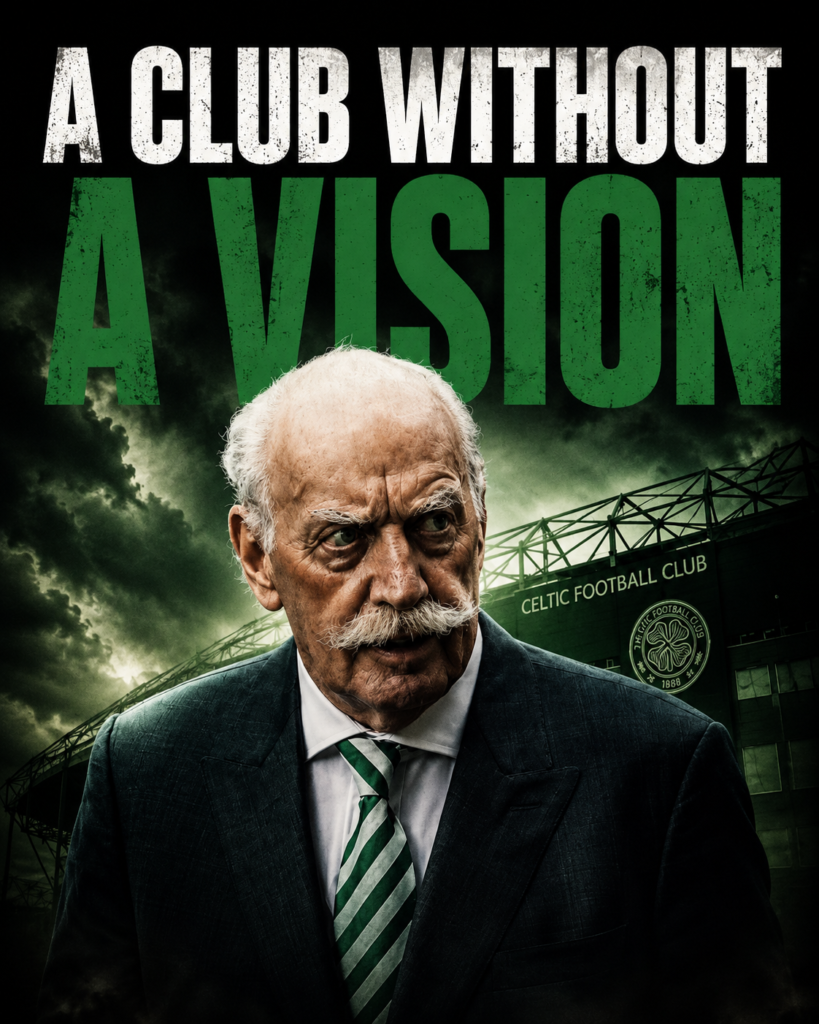

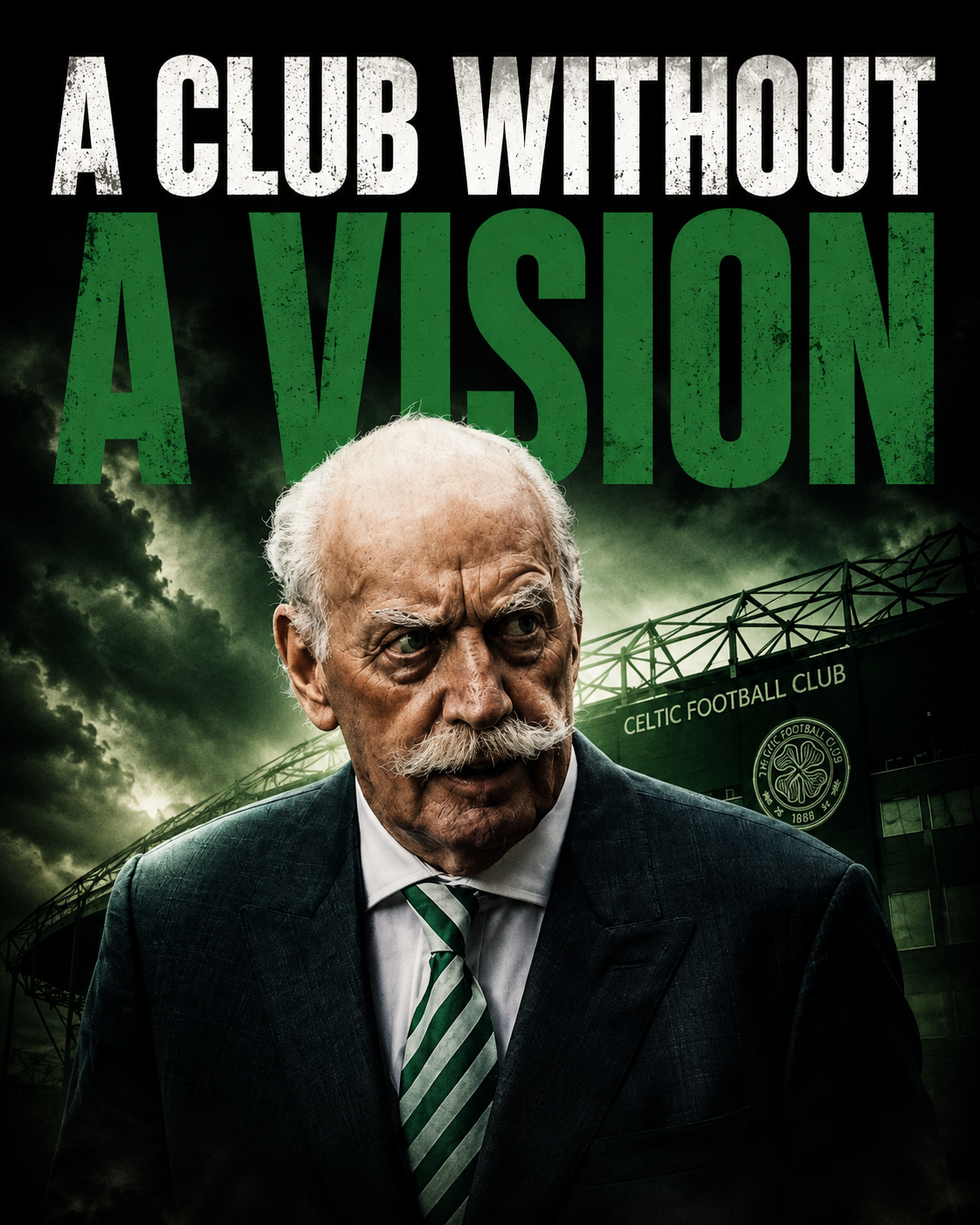
A Club Without a Vision, A Board Without a Voice
There is one question every Celtic supporter should be asking.
What is the long-term vision for Celtic Football Club?
Not the next signing. Not the next transfer window. Not the next financial report.
The actual vision.
Because after years of silence, supporters are still none the wiser.
The most frustrating part is not simply the lack of ambition. It is the complete absence of communication. Celtic is one of the biggest clubs in world football, yet its supporters are treated as though they neither deserve nor require an explanation of where the club is heading.
Every summer follows the same predictable script. Supporters are promised nothing. The board says nothing. Rumours fill the vacuum. Deadlines pass. Opportunities disappear. Eventually, we are told to trust the process.
What process?
Where is the strategy that demonstrates Celtic intend to become a genuine force in European football rather than simply a club content with domestic superiority?
The uncomfortable truth is that there doesn’t appear to be one.
At the heart of this sits Dermot Desmond.
Desmond remains the dominant influence over Celtic, yet he is almost completely absent from public view. He rarely speaks, rarely explains decisions and rarely engages with the supporters whose money continues to fuel the club’s success.
Leadership requires accountability.
Silence is not leadership.
The Celtic support has generated hundreds of millions of pounds through season tickets, merchandise, hospitality, subscriptions and European nights. They have invested emotionally and financially in the club year after year.
In return, they receive little more than carefully worded financial statements and the occasional interview telling everyone how well Celtic is being run.
Supporters are expected to celebrate balance sheets while watching rivals show greater urgency in the transfer market.
That is not ambition.
That is complacency.
Michael Nicholson and the board continually present Celtic as a well-run business. Few would dispute the financial strength of the club.
But Celtic was never built to become a business that happens to play football.
It was built to win.
It was built to compete.
It was built to dream.
Those running the club increasingly appear more interested in protecting the bank balance than pushing Celtic to the next level.
Every season that passes without meaningful investment in areas of obvious weakness sends the same message.
Doing enough is enough.
For many supporters, it no longer is.
The board often mistakes criticism for disloyalty.
They could not be more wrong.
Demanding better is not anti-Celtic.
It is the very definition of supporting Celtic.
The greatest clubs constantly evolve. They innovate. They communicate. They set out clear objectives and bring supporters with them.
Celtic’s hierarchy does none of those things.
Instead, they rely on silence, secrecy and the belief that domestic success alone will eventually quieten legitimate concerns.
It won’t.
Supporters are not asking for reckless spending.
They are asking for leadership.
They are asking for communication.
Above all, they are asking for a vision worthy of one of football’s truly great institutions.
Until Dermot Desmond and the Celtic board recognise that, the disconnect between those running the club and those who sustain it will only continue to grow.
Because the biggest problem at Celtic today is not a lack of money.
It is a lack of ambition, a lack of accountability and a complete absence of vision.